

Resilience is your ability to bounce back and to be okay despite the challenges you face. Sometimes our normal coping strategies are not sufficient to deal with the stressors we are facing, and we need to go back to the drawing board. It’s a good idea to get the professional help of a counselor or psychologist to help you find healthy coping skills that work.
Sometimes, we don’t have the time or energy to do the deeper work and we need immediate relief. It helped me tremendously to understand what is happening in my body and my brain on a physiological level and to understand how that is impacting my thoughts and feelings. And then to know that I can ‘hack’ my central nervous system and I can start to feel differently by activating a different part of my nervous system. Let me explain.
I am not a medical professional, the brain is very complex. The information in this blog is inspired by the work of Dr Dan Siegel. Our bodies have an Autonomic Nervous System which has a radar that is always scanning the environment for danger. You don’t need to think about these responses, it happens automatically.
When danger is perceived, our sympathetic nervous system is activated which is our fight and flight response. This activation releases hormones such as cortisol and adrenaline in your body and communicates to your body to protect you from the danger. A perceived threat is creating a physical response in your body. Our bodies have adapted in this way to keep us safe from danger. Your heart rate increases, your pupils dilate, your muscles are tensed, your breathing rate is increased and all the systems that are not a priority such your digestive system, urination and reproductive system are inhibited. Think about the last time you were feeling scared, what body sensations did you experience?
When we are in danger, there is no time to think, the response is automatic. The thinking part of your brain (frontal cortex) disconnects for that moment and your primitive brain takes over.
When we feel safe, our parasympathetic nervous system is activated, also known as the Rest and Digest or Calm State. This activation releases feel good hormones such as dopamine, serotonin, oxytocin and endorphins. Your heart rate and breathing slows down, your pupils constrict, your digestive and reproductive systems are optimized. Think about the last time you were completely relaxed and safe, what body sensations did you experience then?
The first ‘Aha’ moment here is that your ‘danger radar’ doesn’t recognize the difference between a real threat and a psychological threat. That means, on a physiological level your body has the same response whether an animal is attacking you, or whether you are experiencing fear of rejection or failure. Your brain tells your body you are in danger, hormones are released and bodily functions change to keep you safe.
Think about the things that stresses you in life and how you physically react? I’m a full time working mom with a toddler at home. I feel overwhelmed when after a long day I have to cook, clean, run the bath, attend to my child’s emotional needs and clean the laundry. I’m busy putting laundry away, my child has a meltdown and I’m overwhelmed so I throw the laundry basket and it breaks into pieces. A stress response released adrenaline in my body which caused me to throw something. In that moment, I wasn’t thinking clearly because my body went into fight response and my thinking brain went offline. I ‘know’ I should not break things, but yet I did. I have to carry the consequences of my action- having yet another thing to clean up and now needing to replace my laundry basket.
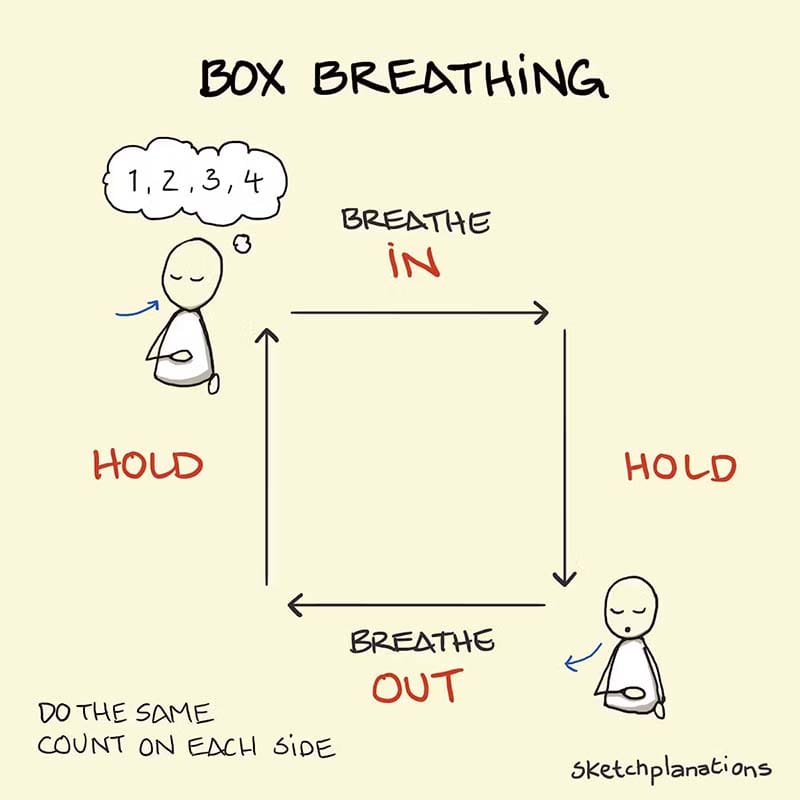
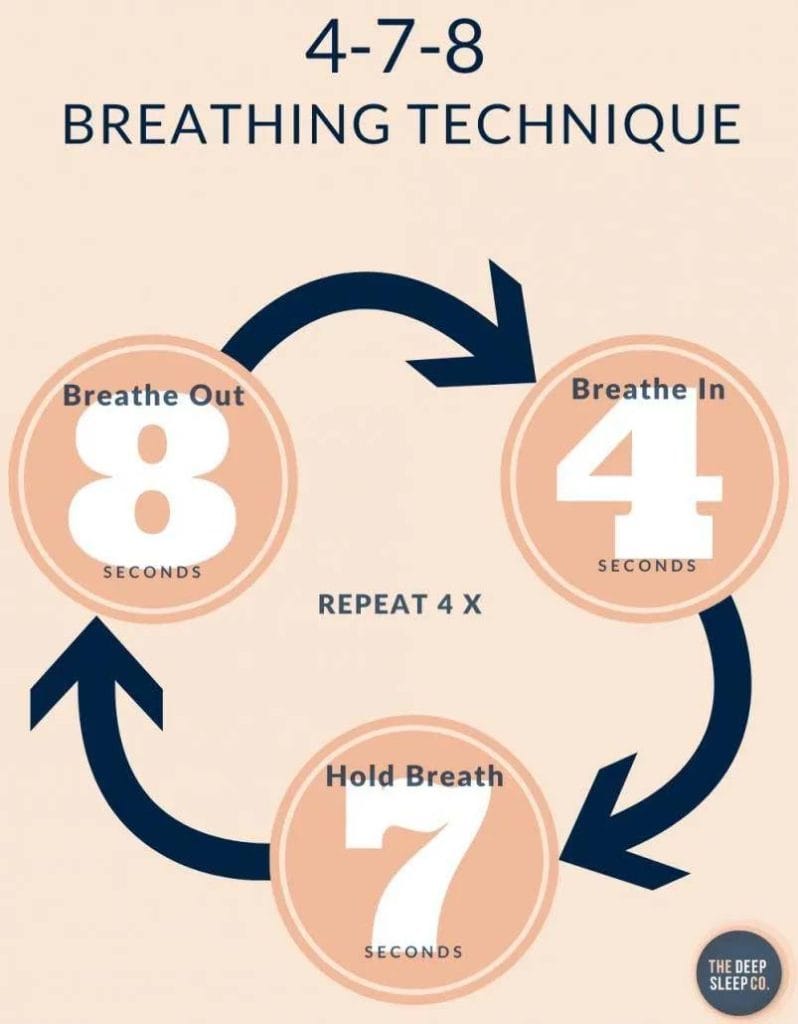
The second Aha moment here is that you can ‘hack’ your nervous system. When your fight and flight response (or sympathetic nervous system) is activated, you can consciously change your body reactions to tell your brain that you are in fact NOT in danger and that it needs to activate the Calm State (or parasympathetic nervous system). You can help your thinking brain to come back online. How do you do that? By breathing deeply. Your breath is the only automatic function in your body that you also have control over. You don’t need to think about breathing during the day or when you sleep, but you can change the way you breathe. By consciously breathing deeper and slower you can signal to your brain that you are safe and give yourself enough time to access your calm state, think clearly and make better choices.. Here are some methods to try out:
- Box breathing
- 4,7,8 breathing technique
Next time you feel overwhelmed, take a moment to do some self care. The more you do it, the easier it will become. Giving yourself the time to check in with your body and to access your calm, is an act of self care and it can tremendously improve your resilience.
At Empowered to Thrive we offer workshops as well as individual counselling sessions with horses where we provide experiential learning opportunities to recognize and practice improved regulation.
Are you ready to hack your nervous system?